
Orange slices

I have a like-hate relationship with Provence.
It started during a summer program for French teachers in Nice back in the 80s. I took train trips to major Provençal cities, as well as a stifling weekend bus excursion to those much ballyhooed hilltop villages.
Of these forays to such fabled sites as Les Baux-de-Provence and Bonnieux, I mainly remember nearly suffering from heatstroke while pondering the absence of ice cubes.
Once I moved to France, further opportunities to visit popped up, but left me underwhelmed. Arles circa 1995 was striking, but felt too dry and dusty.
Friends took us to the famed market of l’Isle-sur-la-Sourgue one Easter weekend; it was so mobbed that I hated every olive-filled minute.
And then there are the geegaws. I know awful tourist items are available all over France, but all those mega-cicadas give me the creeps. (Do tell me they don’t get that big.)
Plus, I’ve never liked purple.
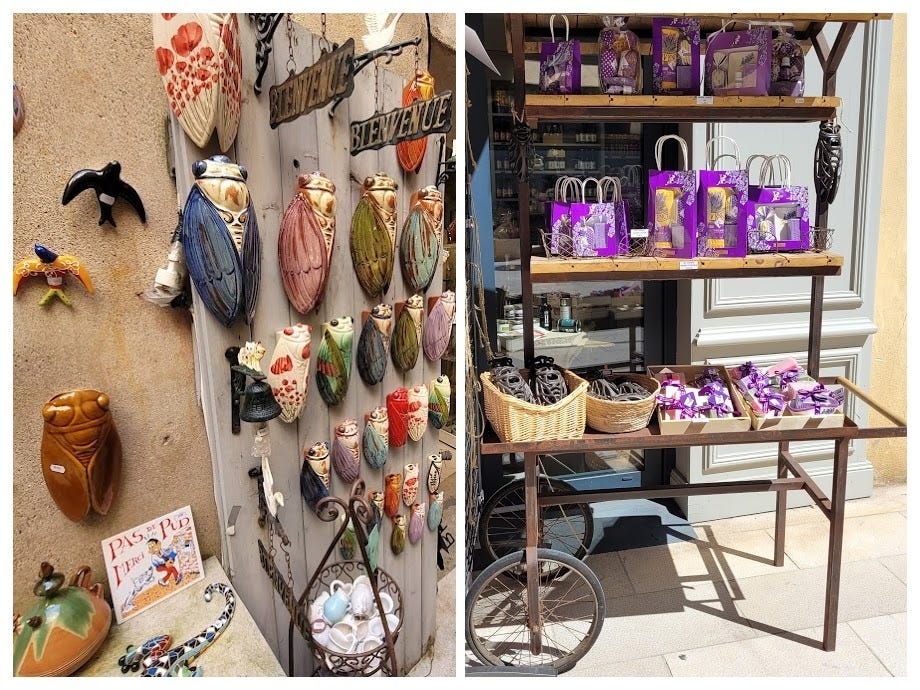
So I thought I’d try Orange, population 29,706 Orangeois and Orangeoises.
If you already want to say no! Betty! Orange is no place to solve a Provence problem! You should have gone to [insert charming Provençal town name], I encourage you to get it out of your system now.
Seriously, Orange was…assez intéressant. But I can’t quite – yet – unpeel an aspect that brings you a whole greater than the sum of its parts.
So for the moment, Orange will remain in slices.1
Le théâtre antique
The city is one of France’s 54 UNESCO heritage sites, thanks to its exceptionally well-preserved Roman architecture, with the starring attraction being its antique theater.
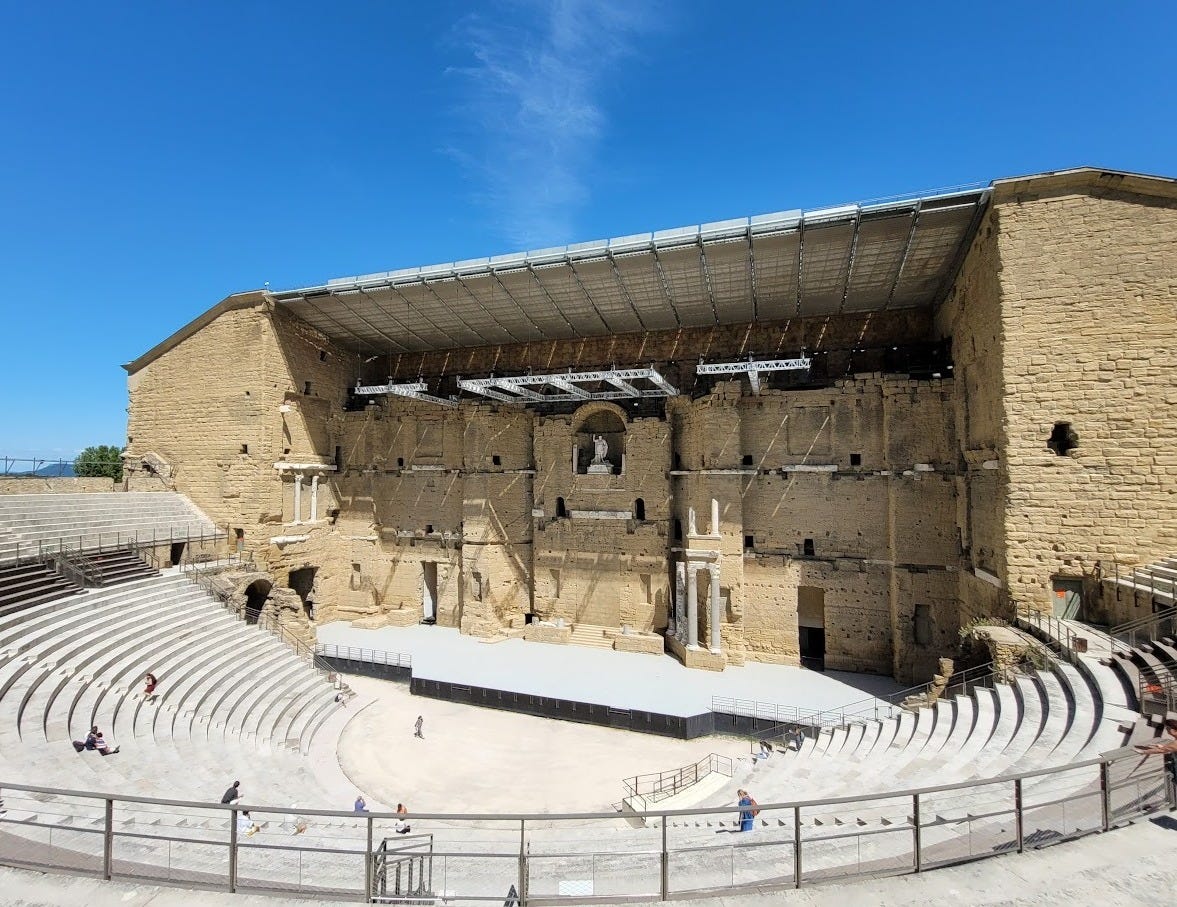
The stage wall is 103 (!) meters long and 37 meters high – in other words, seriously massive.
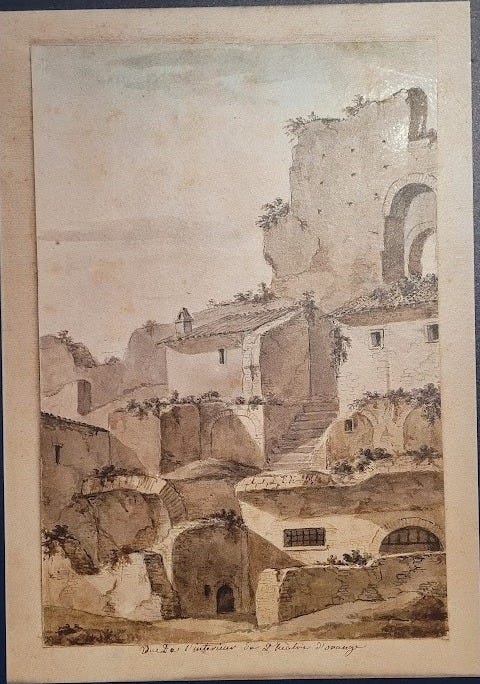
When visiting such a grandiose vestige, it’s easy to imagine that it has been looking just like this for centuries, even millenia.2
But far from it. During the Middle Ages, much of the wall was excavated to make room for houses; in 1814, 91 were still within.
After an initial breathless moment at the top of the arena and a cooling exploration of the tunnels, I quickly felt as if I had seen what there was to see.
I know it’s wrong to think this and even more wrong to write it, but truth is truth.
So I did what self-respecting 21st century tourists do and went in for my first ever augmented reality visit.
Sitting on a soft individual bench, my head crushed by unfamiliar equipment, I joined a young time traveller named Jade, and truly picked up the vibes of the theater’s rocking Roman days.
What a lark! I will no longer be turning my nose up at these immersive experiences.
Have you ever done this type of “visit”?
As I left, I took a moment to admire the street side, which forms the back wall of the stage.
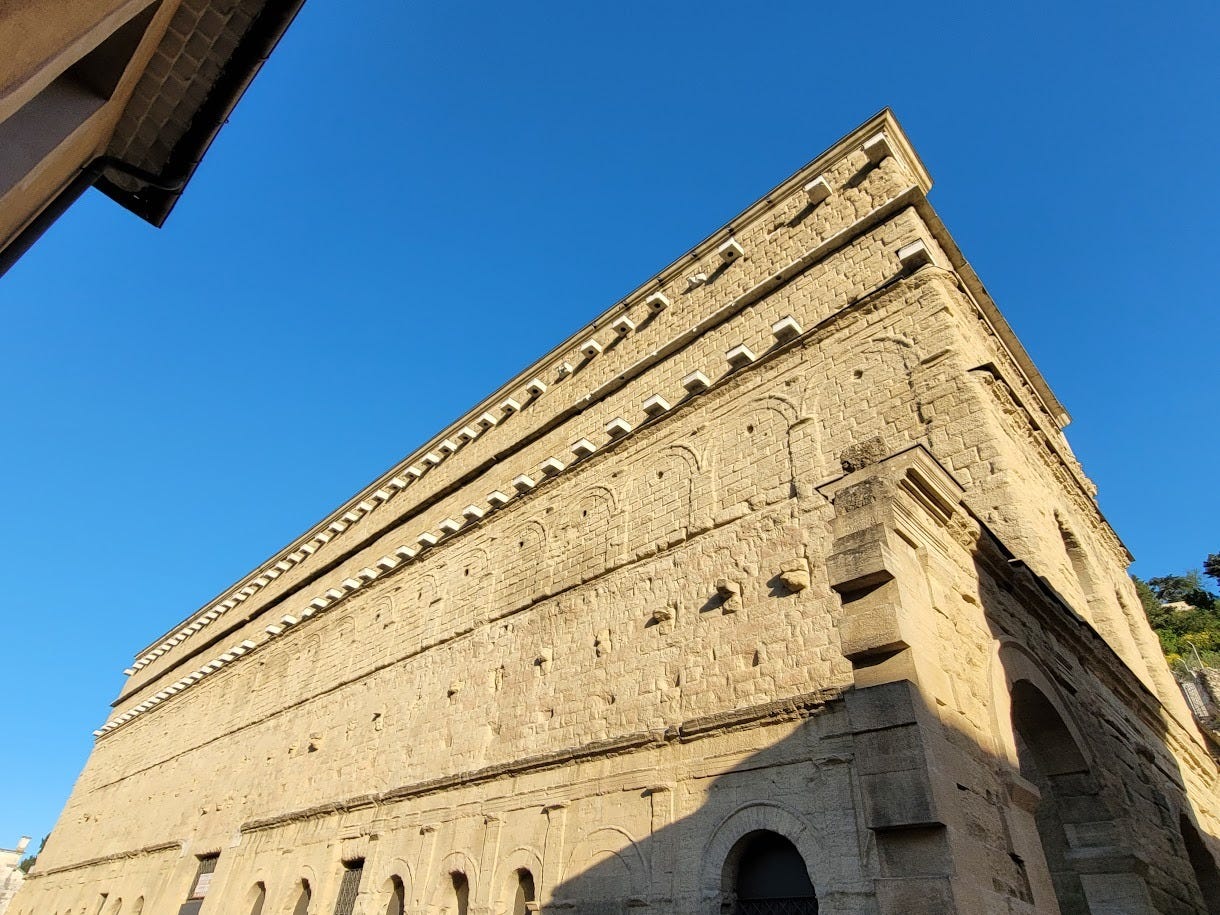
I noticed as I gazed up that “Roxanne” was blaring from a speaker somewhere, which seemed odd for noon.
I didn’t realize it yet, but Orange was going to have a soundtrack.
L’Arc “de Triomphe”
The other UNESCO-recognized site in Orange is commonly referred to as the Arc de Triomphe. The arch isn’t truly triumphant, but commemorative, built to honor the city’s founding as Arausio.
The third biggest Roman arch in the world, its dimensions are topped only by Rome’s Arches of Constantine and Septimius Severus.
Compared to photos of the other two, I find Orange’s to be a bit prettier. But if you’ve visited Rome, feel free to have a word with me.
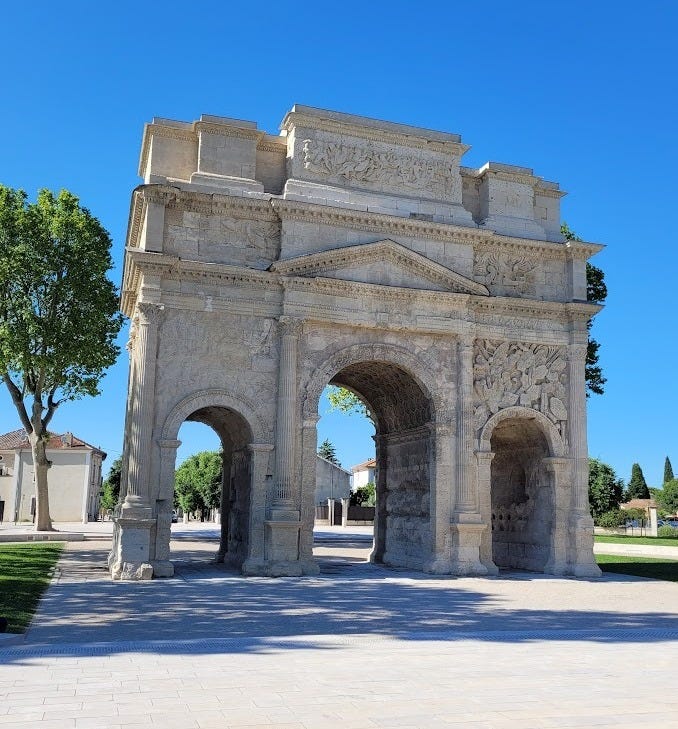
Like the theater, it was minutely restored in the 19th century, and benefited from a thorough cleaning in 2009.
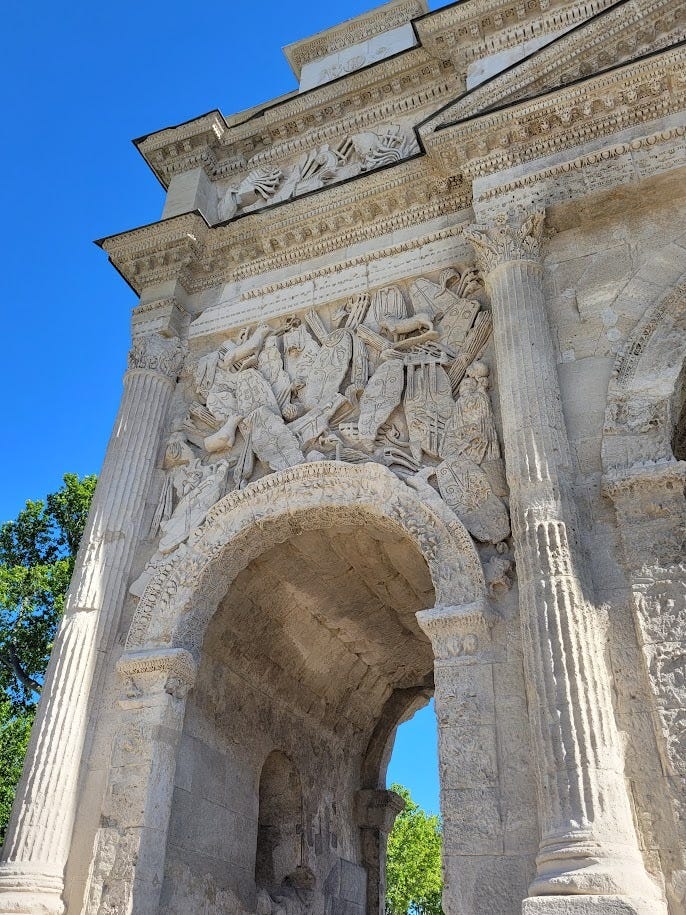
It’s a gorgeous monument, but its park, if you can call it that, is oddly bland and bleak.
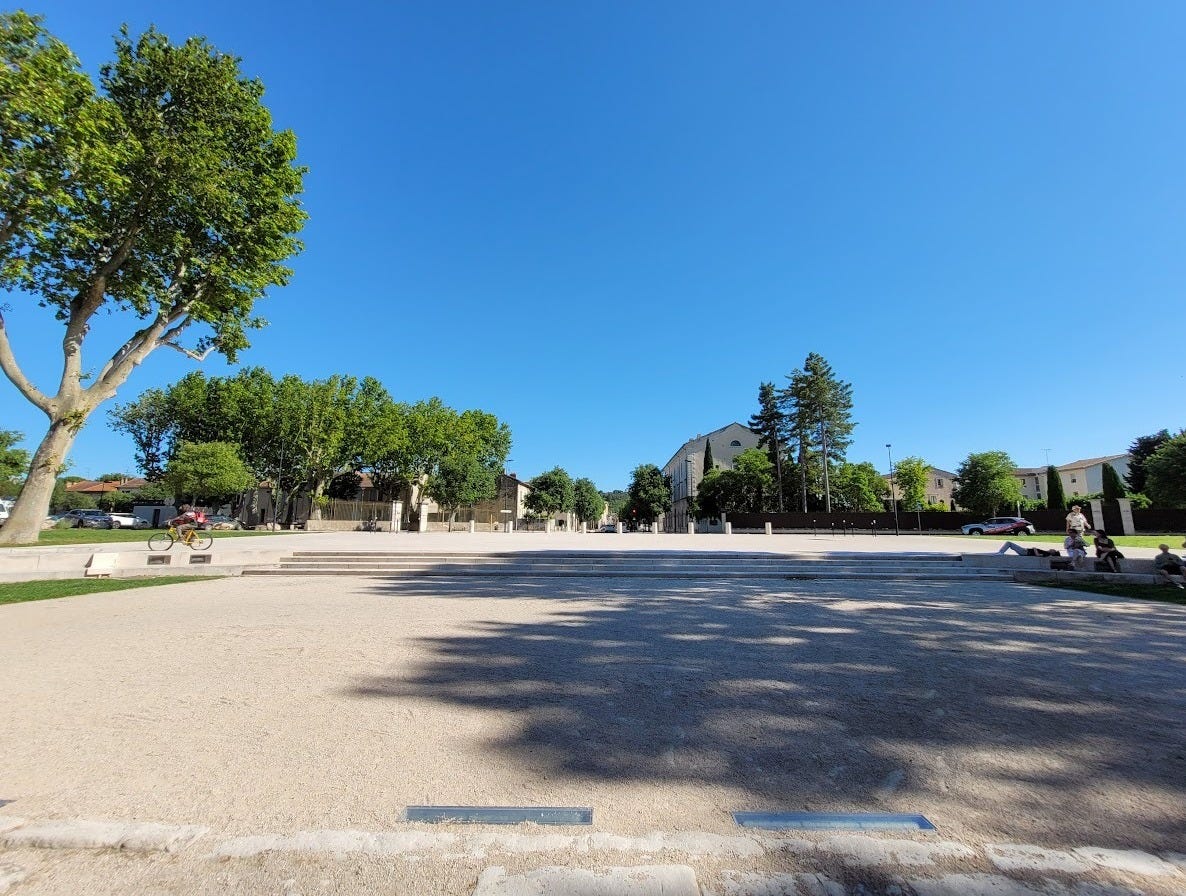
I believe most French cities, if lucky enough to be blessed with a major Roman arch, would make more of an effort to spruce up its surroundings.
I headed back into the plein centre thinking about how Orange could do better.
The old town
I entered the cathedral to the tune of Mrs. Robinson; I guess nothing says Notre Dame like a song associated with an adulterous alcoholic.
Cathédrale Notre-Dame-de-Nazareth is no longer an official cathedral, and it’s a modest affair, but a peaceful and pastel place to escape the music.
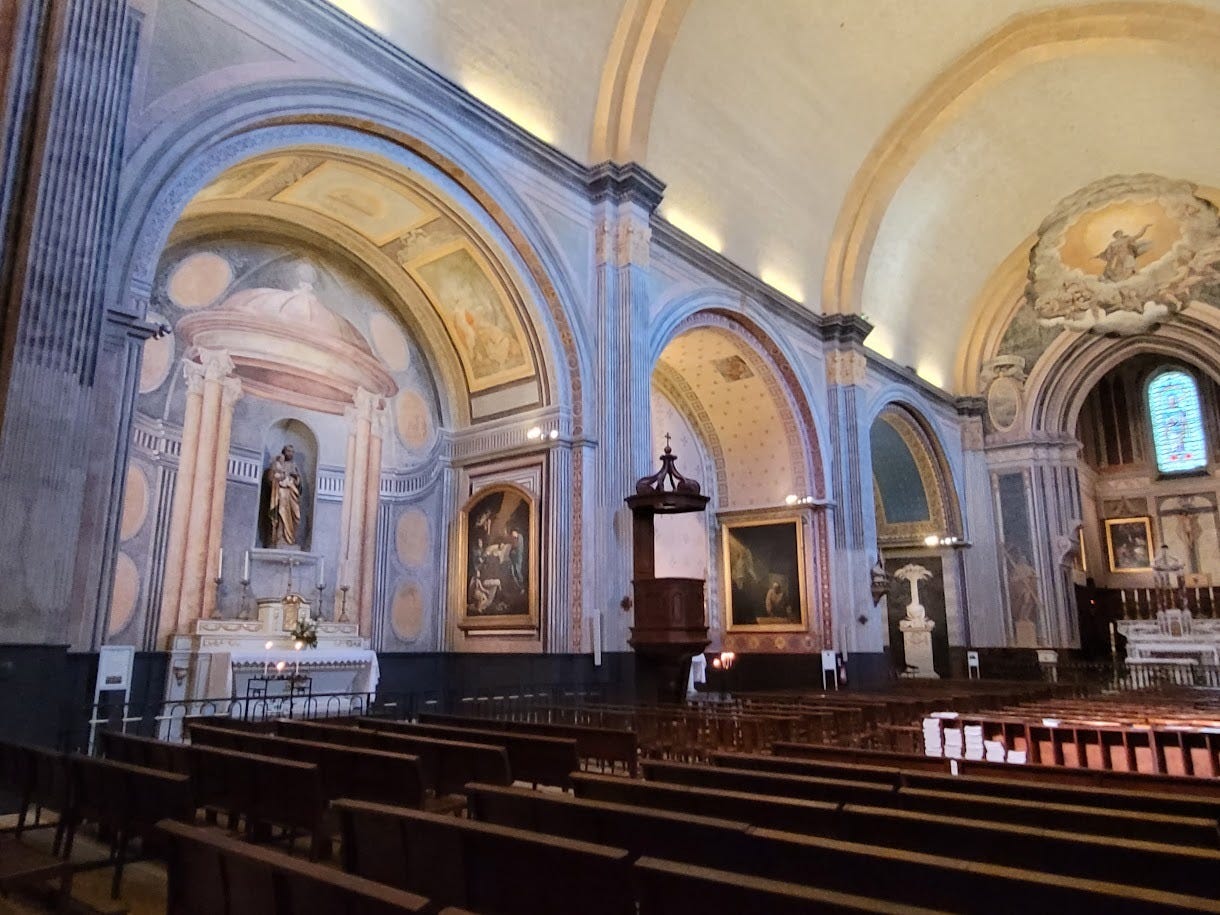
Because by this time I had figured it out – certainly in the name of animation, some city official had decided that downtown Orange could be pepped up by piping, annoyingly loudly, 20th century Anglo hits through the whole damn town center.
There was no escape. Everywhere I strolled, a song intrusively strolled with me.
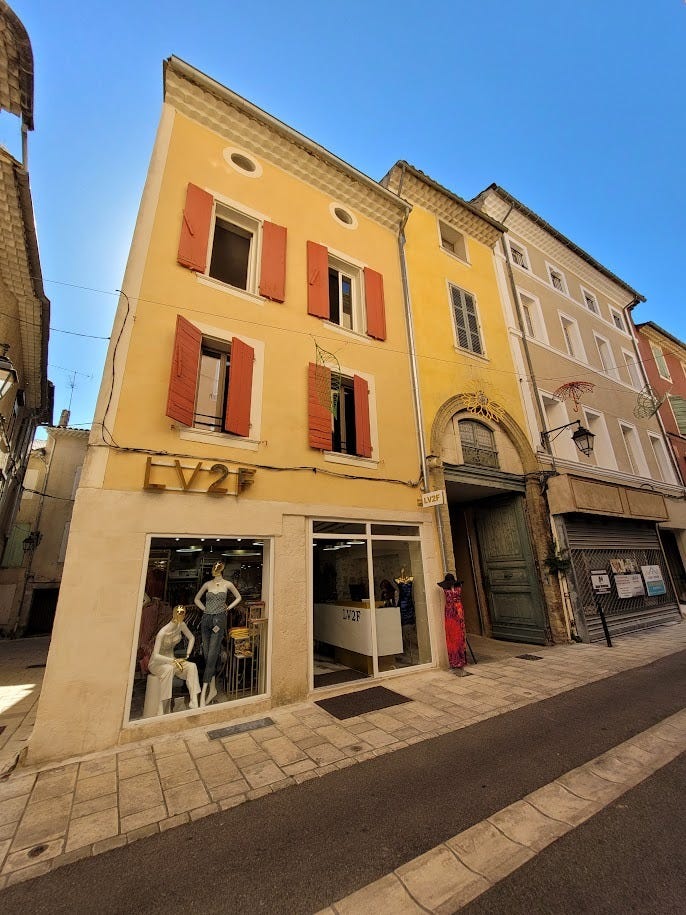
Oh, this was a cute spot:
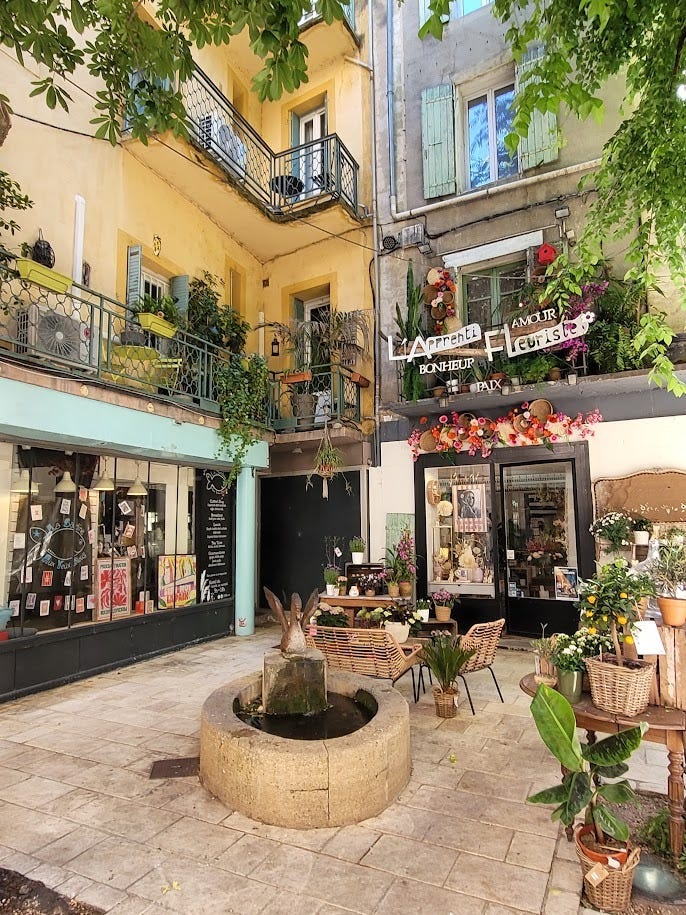
But I didn’t linger because I just wanted to attempt to somehow flee from “Paint it Black,” a song that uniquely conflicted with what I was hoping to get out of this piece of Provence.
And isn’t finding vintage façades one my raisons d’être?
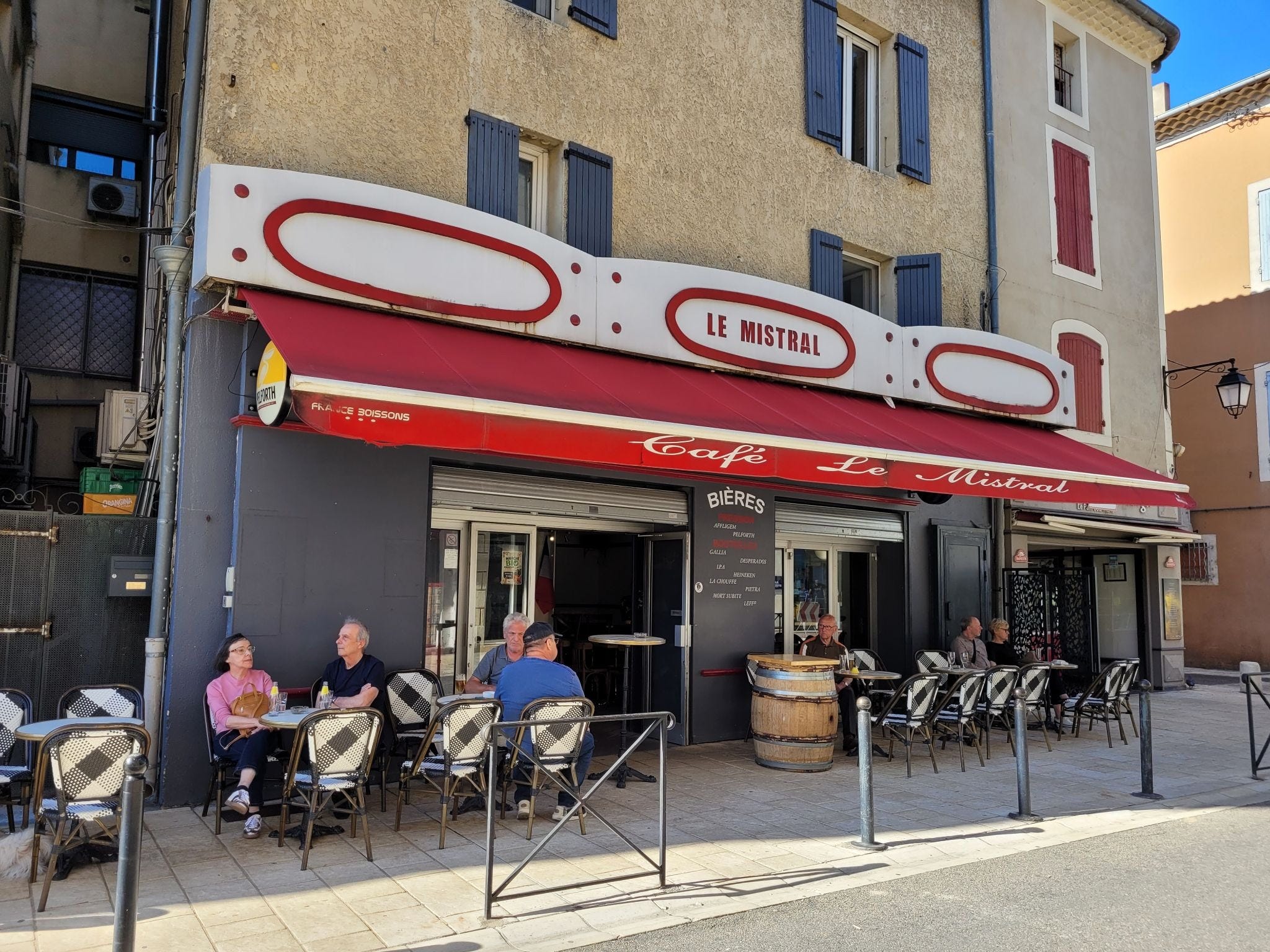
Dylan’s “Sooner or later, one of us must know” jangled from the city jukebox as I took this photo. Bobby had definitely sounded better in my car driving down.
I finally tucked into a beer on this somewhat soulless square, with Stealers Wheel as foreground music.
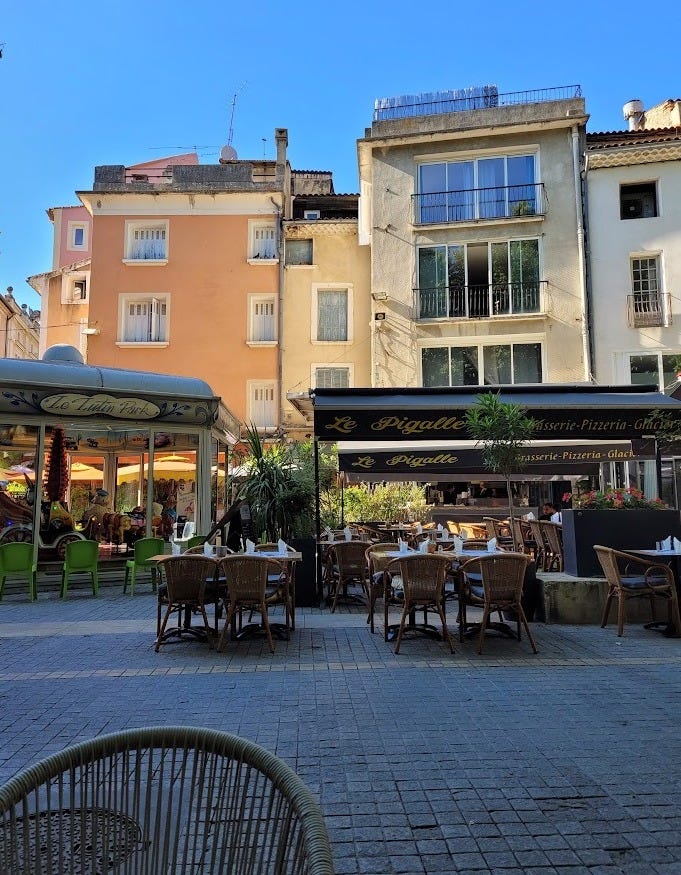
Well I don’t know why I came here tonight
I’ve got the feeling that something ain’t right…
I decided to pin my Provençal hopes on my next destination by leaving earlier than planned in the morning.
I’d soured on Orange.
I’m ferociously attached to the freedom of choosing my destinations, writing what I really think, and sharing a combination of the traditional and the unexpected.
You can support my efforts, and receive posts weekly, by taking out a (cheap) paid subscription.
But comments are tops too!
Sources:
Arc de triomphe romain d’Orange | Provence 7
Orange, M. Merciairi, Editions P.E.C., publication date unspecified
The origin of the city’s name is uncertain, but may have evolved from its Roman name Arausio. Although inevitably associations with the fruit or the color have developed over the centuries, my plays on words are poetic license.
The theater was built in the 1st century B.C.
The only reason I can think of to visit Orange is to attend a performance in the theatre, and I'd probably do it from the safety of Avignon.
Whatever bureaucrat came up with the idea of the English-language music blaring out everywhere should be forced to listen to it for hours on end. What a way to ruin a downtown.